Physical Address
304 North Cardinal St.
Dorchester Center, MA 02124
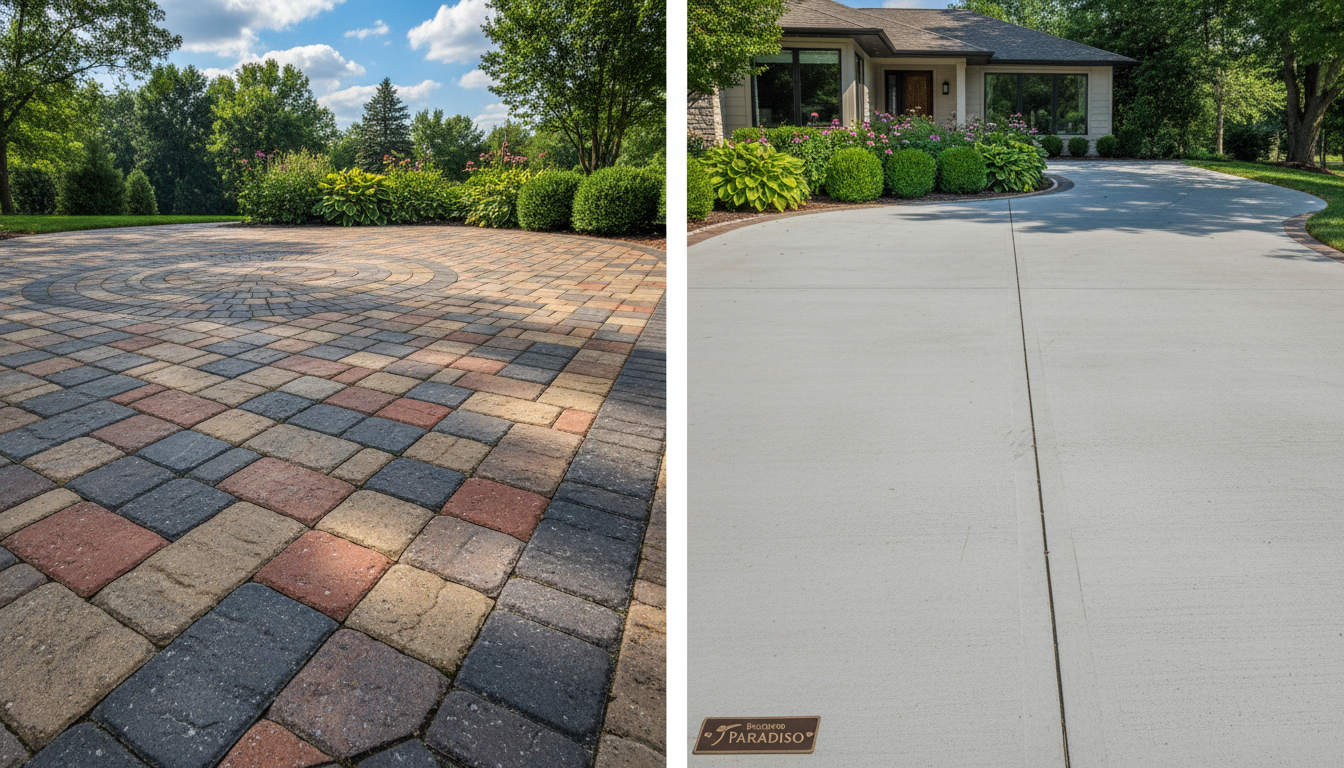
What if the most popular selection for your outdoor surface is also the one you could regret the most in five years?
Choosing the right material isn’t just about picking a look. It’s a major investment for your home that balances upfront cost with long-term value and headaches. I’ve seen the dilemma firsthand.
This guide cuts through the noise. We’ll give you the straight facts to make a confident choice. At Backyard Paradiso, we’ve installed both types of surfaces from Florida’s humidity to Colorado’s freeze-thaw cycles. Our advice comes from real-world experience, not theory.
We’ll honestly compare costs, installation timelines, durability, and maintenance. We’ll show how climate in places like San Antonio or Chicago affects performance. The “right” option depends on your priority: lowest cost, easiest upkeep, best looks, or highest resale value.
By the end, you’ll have the knowledge to discuss your project with any contractor and make a decision you’ll be happy with for decades.
I get asked one question more than any other: should I go with pavers or concrete for my hardscape project? The answer is never universal. Your specific climate, budget, and how you plan to use the space are the real deciding factors.
After installing hundreds of outdoor living projects across seven distinct U.S. markets, I’ve seen the same materials perform differently. Humidity in Naples, FL, demands a different solution than the freeze-thaw cycles in Denver, CO.
We’ll break down the key differences: upfront cost, long-term maintenance, repair ease, aesthetic flexibility, and installation time. This comparison focuses on hardscape areas like patios and driveways, where your choice impacts daily life and home value the most.
At Backyard Paradiso, we install a full range of features. This includes decks, pergolas, artificial grass, fencing, and lighting. We’re outdoor living specialists, not advocates for just one product. We recommend the right solution for each application.
| Market | State | Primary Climate Challenge |
|---|---|---|
| Naples & Orlando | Florida | High humidity, heavy rainfall |
| San Antonio | Texas | Intense heat, sun exposure |
| Denver & Colorado Springs | Colorado | Freeze-thaw cycles, snow |
| Romeoville | Illinois | Harsh winters, temperature swings |
| Secaucus | New Jersey | Seasonal moisture, variable temps |
My goal is to cut through common myths. We’ll use real numbers from our installations, not theory. I’ll show how project size changes the cost equation and address misconceptions like “one material always cracks” or “the other always costs twice as much.”
Our expertise isn’t limited to one surface. We integrate various elements to create a cohesive design. This holistic view ensures we recommend the best materials for your entire project, not just a single component. The right look and function come from understanding the whole picture.
Forget ballpark estimates; we’re diving into precise cost data based on hundreds of real installations. The price you pay per square foot changes dramatically with your project’s scale.

Let’s look at real numbers. For a small 100 sq. ft. area, one decorative option totals around $4,200. That’s often less than stamped designs.
Scale up to 500 sq. ft., and the cost per square foot for stamped surfaces drops significantly. For large 1,500 sq. ft. utility spaces, basic poured material becomes the most budget-friendly.
| Project Size | Material Type | Total Cost | Cost per Sq. Ft. |
|---|---|---|---|
| 100 sq. ft. | Brushed | $2,800 | $28 |
| 100 sq. ft. | Stamped | $5,500 | $55 |
| 100 sq. ft. | Modular Units | $4,200 | $42 |
| 500 sq. ft. | Stamped | $11,000 | $22 |
| 500 sq. ft. | Modular Units | $15,000 | $30 |
| 1,500 sq. ft. | Brushed | $12,000 | $8 |
| 1,500 sq. ft. | Modular Units | $50,000 | $33.33 |
Current 2025 price ranges confirm this trend. Plain poured surfaces run $9-$16 per square foot. Stamped designs range from $12-$28+. Modular unit systems generally cost $20-$35 per square foot.
Installation time is another key factor. A 500 sq. ft. patio with individual units takes about two days. The same area with a stamped finish can stretch to five days due to multiple sealing steps.
The process for unit systems involves a deep base, hand placement, and joint sand. Stamped work requires forming, pouring, coloring, stamping, and sealing.
Don’t forget long-term upkeep. Stamped surfaces need resealing every few years. Unit systems typically require re-sanding less often, affecting lifetime cost.
Professional installations succeed or fail based on a few critical technical specifications that most homeowners never see. Getting these terms right is what separates a decades-long investment from a recurring headache.
For driveways, the industry standard is an 80mm thick paver. This handles vehicle loads. Patios can use 60mm units for foot traffic.
The base is everything. We use a clean, open-grade aggregate over geotextile fabric. This prevents moisture retention and settling.
Polymeric sand in the joints locks everything in place. It stops weeds and allows for drainage. This avoids the water-trapping issues common in some slab installations.
Proper concrete requires strict adherence to ACI guidelines for thickness and reinforcement. Many contractors cut corners here.
Local weather dictates everything. In Florida’s humidity, the ground shifts constantly. A monolithic slab is prone to cracking under this movement.
Individual concrete pavers flex independently. They handle expansion and contraction without catastrophic failure. This is crucial in Denver’s freeze-thaw cycles.
Installation weather is another key factor. Pouring a concrete surface requires ground temps above 40°F. Rain can ruin the finish. With modular material systems, we can work in almost any condition except frozen ground.
This flexibility means fewer project delays. It provides a more predictable timeline for homeowners.
Beyond the initial look and cost, the true character of your outdoor surface reveals itself through years of weather and wear.
There’s a running industry joke about poured slabs: they’ve either cracked already or they’re about to. This speaks to a real vulnerability. Temperature swings and ground movement cause cracks in monolithic surfaces.
Modular units handle these stresses differently. When a tree root lifts a section in Florida, we fix it in hours. The repair costs hundreds, not thousands. You’d never know there was an issue.

Regular maintenance is another key difference. Stamped finishes need resealing every few years. Skip this, and your investment fades fast.
With interlocking systems, sealing is optional. Refreshing the polymeric sand every 5-7 years is the main task. This less-frequent schedule saves time and money long-term.
Weather tests everything. In Colorado, freeze-thaw cycles make poured surfaces spall and crack. Modular designs flex at the joints instead.
Texas heat causes expansion issues too. Again, the joint system accommodates movement. This prevents the prone cracking seen in slabs.
Warranties reflect these realities. Many slab warranties exclude common cracking. Quality unit installers offer specific coverage for settling, with lifetime product guarantees.
Your local climate dictates which maintenance challenges you’ll face. Plan for the long haul, not just installation day. Smart repairs and proper care protect your home’s value for decades.
Across the seven markets we serve, I’ve witnessed firsthand how weather patterns make or break a patio or driveway. Your local climate is the ultimate test for any outdoor surface.
In Florida’s humidity, monolithic slabs often crack. Modular systems flex independently, avoiding visible damage. Texas heat demands cooler materials for safety.
Colorado’s freeze-thaw cycles cause poured concrete to spall. Segmental pavers handle the movement gracefully. This difference is crucial for long-term value.
For a new patio in Naples, design flexibility matters. Stamped concrete colors fade. Integral color in units lasts decades.
| Market | Primary Challenge | Better Choice | Key Advantage |
|---|---|---|---|
| Naples & Orlando, FL | High humidity & heat | Concrete Pavers | Independent movement, no cracking |
| San Antonio, TX | Extreme surface heat | Light-colored Pavers | Cooler underfoot, safer |
| Denver & Colorado Springs, CO | Freeze-thaw cycles | Paver Systems | Accommodates expansion |
| Romeoville, IL | Temperature swings | Paver Driveway | Resists frost heave |
The pros are clear. In utility areas, cost per square foot matters. For primary living spaces, the advantages of modular units justify the investment every time.
Your investment in a patio or driveway is a commitment. Choosing wisely means looking decades ahead, not just at the price tag.
The core difference is clear. One option offers a lower upfront price. The other delivers superior long-term value through easier repairs and better performance.
For your primary home spaces like a driveway or patio, the pros of pavers justify the cost. Their flexibility handles weather extremes. Simple repairs protect your investment for years.
For large utility areas, poured concrete can be a functional choice. Understand the differences in maintenance, like resealing versus re-sanding.
An expert installation is crucial for either material. Now you can make a confident decision for your home‘s value and your daily enjoyment.
