Which structure will really stand the test of time in your backyard? I ask that because picking the right material for your garden is more than style—it’s about years of use, upkeep, and peace of mind.
I’ve watched pergolas evolve from simple vine trainers in the 1640s to the modern shade makers we choose today. In my experience, durability and longevity are the two factors homeowners ask about first.
Choosing the right choice means weighing how much time you want to spend on maintenance versus enjoying your outdoor space. I’ll compare inherent strength, weather resistance, and real-world lifespan so you can make a smart decision.
Key Takeaways
- Understand the long-term durability differences before you buy.
- Consider maintenance time when choosing a material for your garden.
- Modern aluminum pergolas often win in harsh climates for longevity.
- A classic wood look can still be right for lower-exposure sites.
- I’ll help you balance cost, upkeep, and lifespan to find the right choice.
Understanding the Differences Between Wood vs Aluminum Pergola
Choosing between a classic timber build and a contemporary metal frame is about more than looks; it’s about performance.
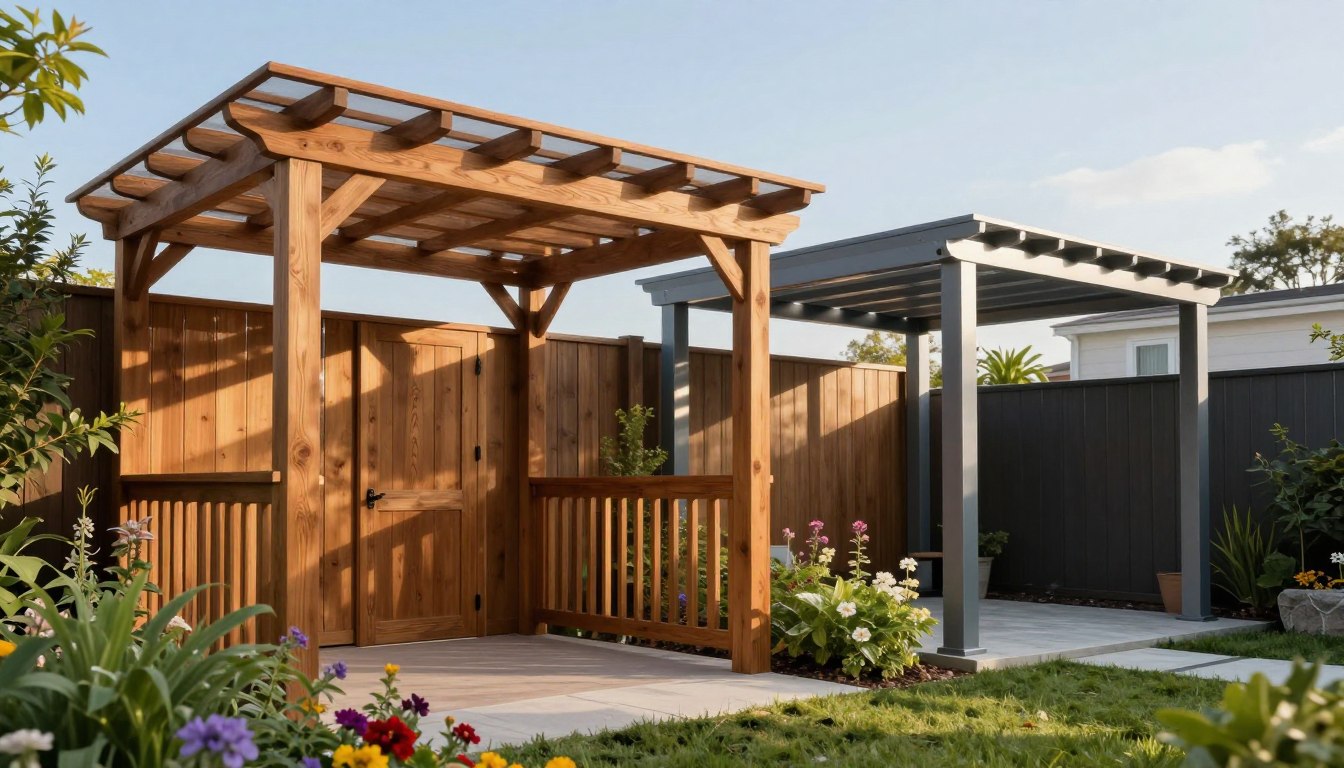
I see two clear use cases when I evaluate materials for an outdoor structure. A wood pergola often wins on charm and fits a small garden or intimate space with ease.
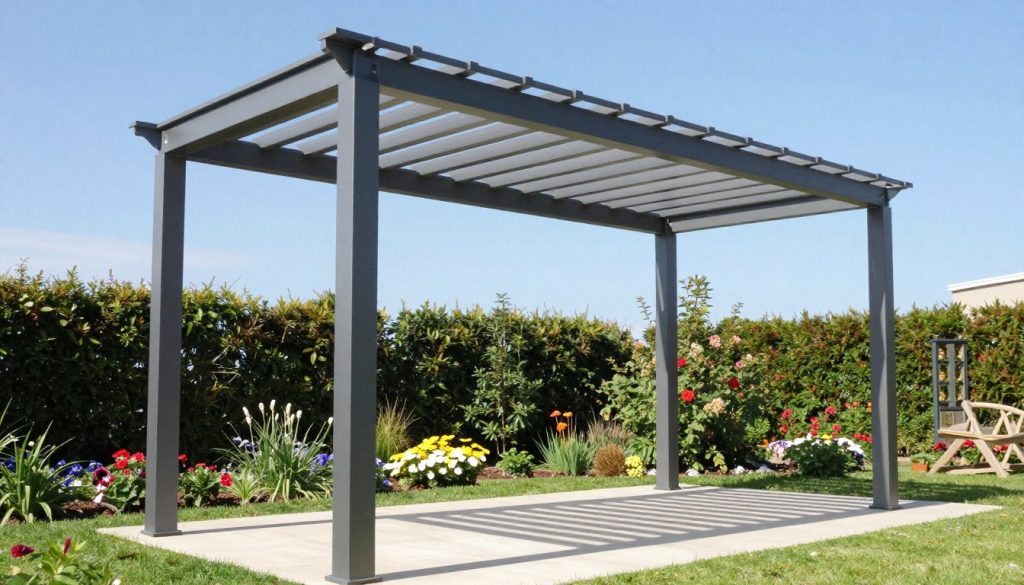
By contrast, aluminum pergolas deliver consistent strength and scale. Commercial developers pick them for large projects because the metal offers predictable quality and less variability than natural timber.
Think about traffic and maintenance. A wooden pergola may be perfect for a quiet backyard. But in high-use areas, an aluminum pergola stands up better to repeated wear and weather.
- Traditional wooden looks for cozy, personal yards.
- Engineered metal frames for commercial or large-scale design needs.
- Your final choice should match long-term goals for upkeep and value.
The Traditional Appeal and Maintenance Demands of Wood
A classic timber build brings instant charm, but it also asks for ongoing care.
Natural Aesthetic and Versatility
I love the warm grain and scent of cedar—it’s naturally insect-repellent and looks great in any backyard.
Wood pergolas offer a timeless style and flexibility in design. You can stain or shape them to match your garden or living space.
That versatility makes wooden pergolas a favorite for homeowners who value appearance as much as function.
Common Issues Like Rot and Weathering
But charm comes with trade-offs. Exposure to rain and sun leads to swelling, cracking, and dry rot over the years.
“Many beautiful wooden structures fail because owners underestimate the time needed to keep the finish fresh.”
If you choose a wood pergola, expect years of staining or painting and regular maintenance to protect durability. The cost of repairs for rot or structural damage can add up, and insect or fire risk is real.
- Expect regular maintenance and periodic professional fixes.
- Cedar resists pests but still needs protection from moisture.
- Consider total cost and time before committing to this classic option.
Modern Advantages and Durability of Aluminum Structures
When longevity and low upkeep matter most, modern metal frames change the conversation.
Superior Longevity and Powder Coating
High-grade aluminum frames are cut with precision robotics (Azenco-style fabrication), so joints look seamless and the frame stays true over time.
The secret to lasting color is a fluoropolymer powder finish that resists fade and stands up to rain, sleet, and snow. That means minimal maintenance and fewer touch-ups compared with traditional options.
Innovative Louvered Roof Technology
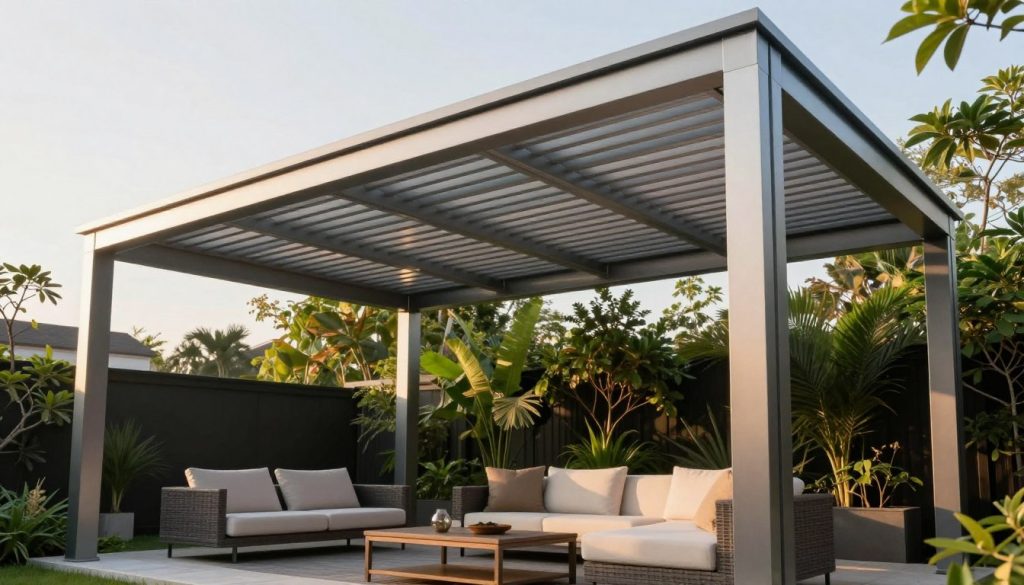
Motorized louvered roofs let you manage sun and rain at the push of a button. They add real usability to an outdoor living area, turning a simple space into a year-round room.
These roofs pair well with smart sensors and heaters. The result: a controlled environment that protects furniture and extends usable time outdoors.
Extruded kits range from small to large sizes (1″×1″ up to 8″×12″), so designers and homeowners can scale easily.
- The metal allows wood-grain finishes for a classic look without rot or heavy upkeep.
- LED lighting, integrated heaters, and automatic sensors are easy additions.
- High-strength construction means excellent resistance to harsh weather and long-term durability.
“I often recommend metal frames to clients who want a modern style that lasts and needs less attention.”
Making the Right Choice for Your Outdoor Living Space
Your final decision should balance budget, the look you want, and how much time you’ll spend on upkeep. I recommend listing priorities first: cost, design, and regular maintenance.
If you want low fuss and long life, choose a powder‑coated frame and louvered roof for year‑round use. That choice reduces rot, staining, and repair bills over the years.
If a classic appearance matters and you enjoy projects, a wood pergola or wooden pergolas can suit a quiet backyard. But expect regular care and occasional fixes.
Weigh cost, durability, and your schedule. Do that and you’ll create a comfortable outdoor living space that lasts for many years.
FAQ
Which material lasts longer in rainy or humid climates?
Both options can hold up well, but metal frames with powder coating typically resist corrosion and moisture damage better than untreated timber. If you want minimal upkeep and decades of service, a coated metal structure is the safer bet. I’ve seen coated systems remain solid for 20+ years with just occasional cleaning.
How much maintenance does a wooden structure need compared to a metal one?
Wooden frames require regular sealing, staining or painting every few years, plus checks for rot, insect damage, and loose fasteners. Metal options ask for much less: rinse off debris, touch up scratches in the finish, and lubricate moving roof parts if applicable. My experience: upkeep time drops dramatically with metal.
Can a traditional wooden look be achieved with modern metal systems?
Yes. Powder-coated metal can mimic warm tones and grain-like finishes, and many manufacturers offer textured coatings and trim options to soften the industrial look. You can get the appearance you want without the same level of maintenance.
Are louvered roofs available in both materials, and which performs better?
Louvered roof systems are common in metal builds and generally outperform wooden variants because metal louvers resist warping and water damage. If you want adjustable sun and rain control with long-term reliability, a metal louvered system is usually the top choice.
How does cost compare up front and over time?
Initial costs vary by size, finish and features. Timber often has a lower sticker price for basic builds, but recurring maintenance can add up. Metal tends to cost more up front but saves money on maintenance and replacement over time. I tell clients to calculate a 10–15 year total cost to see the real value.
What about structural strength and wind resistance?
Coated metal systems often provide higher strength-to-weight ratios and better engineered resistance to wind and snow loads. Properly constructed timber frames can be robust, but they require thicker members and more frequent inspections. For coastal or high-wind areas, I typically recommend metal.
Which option offers more customization for size and design?
Metal gives you finer tolerances, integrated lighting, and motorized roofs more easily. Timber excels at custom joinery and organic shapes for a handcrafted look. Your choice depends on whether you prioritize precision features or artisanal character.
How do both materials age aesthetically over time?
Timber develops a natural patina, which some homeowners love; but it can also split or discolor without care. Coated metal keeps its color and profile much longer; chips can be touched up to maintain appearance. I once helped a neighbor restore a faded wooden arbor, and the work was rewarding—but time-consuming.
Can I mix materials for a best-of-both-worlds solution?
Absolutely. Many successful designs pair a metal frame with wooden slats or accents, or use timber posts with a metal roof system. This hybrid approach balances warmth and durability while allowing targeted maintenance where it matters most.
What should I consider when choosing between the two for resale value?
Buyers often favor low-maintenance, durable outdoor features. A well-finished metal system or a meticulously maintained timber structure can both add value, but the fewer ongoing chores it requires, the broader the appeal. I recommend documenting care and warranties to reassure future buyers.