Physical Address
304 North Cardinal St.
Dorchester Center, MA 02124
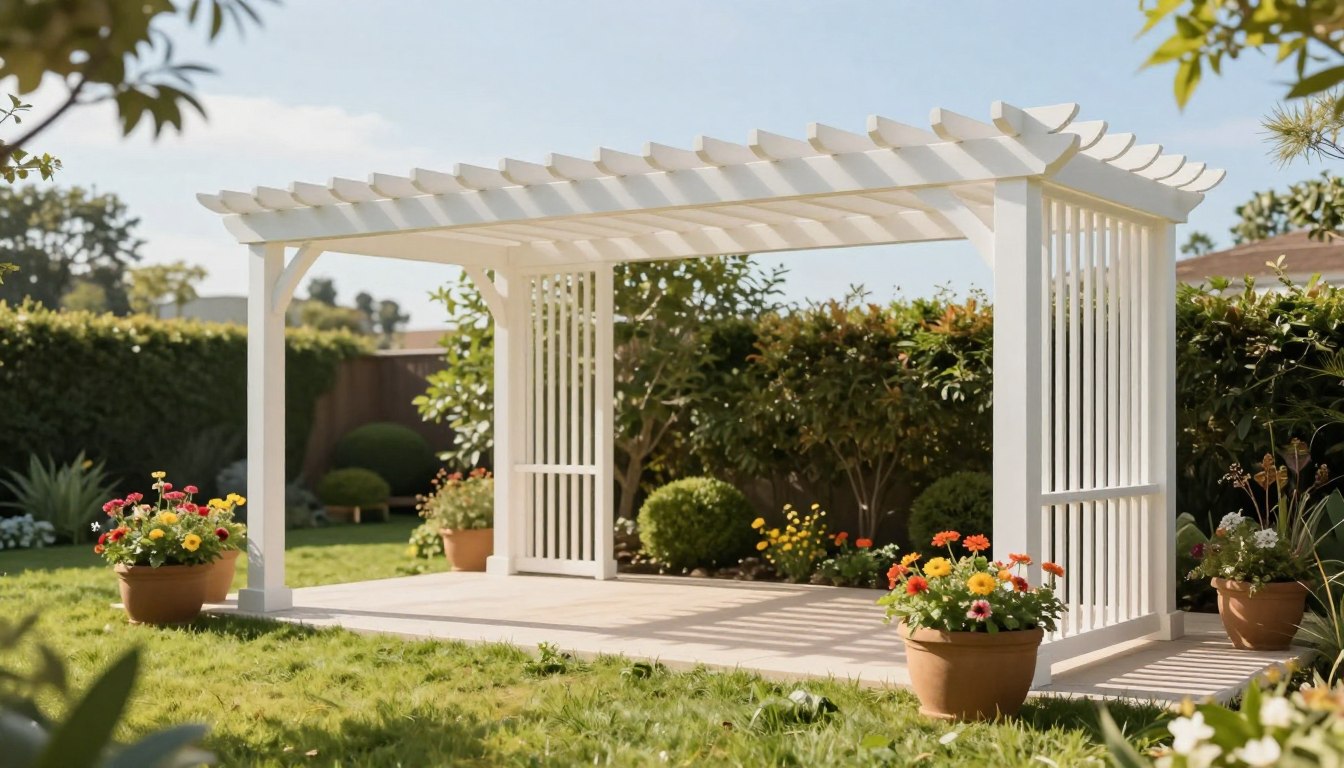
Curious: can a simple shade structure truly transform your backyard for years to come?
I ask that question often when I walk clients through design choices. I have spent years helping homeowners turn outdoor space into usable living areas, and the first decision is always what material to choose.
From ancient Egyptian garden paths 3,000 years ago to modern home landscapes, the idea of a pergola has evolved. Today most people pick between vinyl, fiberglass, or wood for their structure.
When I evaluate a pergola material, I focus on how the finish will hold up to local weather and the long-term maintenance it will demand. I also weigh cost, design, and the look you want for your backyard.
My aim is to give clear, practical insight so you can make the right choice for your home and outdoor living goals.
A crisp, formal frame can change how you use the space outside your home in a single weekend. I often recommend this option when clients want an instant upgrade with little fuss.
Most units come in white or beige, giving a clean, column-like appearance that reads as intentional and polished. Unlike wood, this material keeps a steady appearance for years without frequent staining or sealing.
“A simple, set-it-and-forget-it structure gave our patio a defined purpose with almost no maintenance.”
| Feature | Appearance | Best For |
|---|---|---|
| Color options | White or beige | Classic, clean yards |
| Maintenance | Low; occasional wash | Busy homeowners |
| Design fit | Formal, column-like | Small backyard & defined space |
I like to start practical: what you trade for low upkeep and what you might pay later.
Benefits of low upkeep
One big plus is near-zero staining or sealing. That saves time each year and keeps your patio looking tidy with a quick wash.
These kits usually speed up installation, which lowers labor costs and gets you using the space faster. They resist rot and insects, so routine maintenance is limited. 🙂
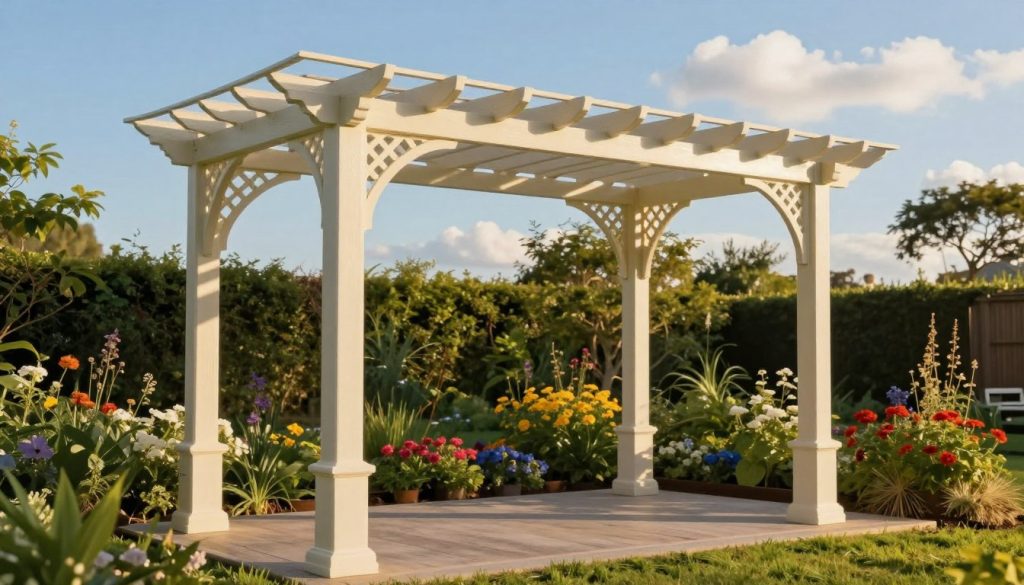
But there are trade-offs. This material is the weakest of the main choices and can sag under heavy snow or warp in intense heat.
Typical cost ranges from $4,500 to $9,500, which looks good up front. Yet if cracks or warping occur, you cannot refinish the surface—you replace it.
“If you live in harsh weather areas, lowered strength can mean higher replacement costs over time.”
| Factor | What to expect | Why it matters |
|---|---|---|
| Maintenance | Low (wash only) | Saves time and effort |
| Durability | Moderate; can soften/sag | Risk in snow-heavy or hot areas |
| Installation | Quick; kit options | Lowers labor costs and time |
| Long-term costs | Replacement if damaged | No refinish option; possible higher lifetime costs |
When you stack up options, the differences between wood, fiberglass, and molded panels become clearer fast.
Wood usually wins for classic looks and customization. Wood pergolas let you attach the frame directly to your home and stain or paint for a tailored finish. That flexibility adds value, but it also raises installation time and yearly care. Typical costs run from $7,500 to $18,000 depending on customization.
Fiberglass sits between wood and lighter molded kits. It resists rot and holds paint well, so the appearance lasts longer with modest maintenance. For many homeowners, it balances look and durability without heavy upkeep.
I often recommend aluminum as a premium option. Systems like EaglePatio use 6063-T5 architectural aluminum for superior strength and structural stability.
“Aluminum is the best pergola material for homeowners who want long-term performance with minimal upkeep.”
I judge an outdoor structure first by how it handles stress—rain, salt air, heat—and second by how long it keeps that promise.
Structural integrity is the most critical choice factor if you live in areas with high winds or heavy snow. A weak frame can sag, crack, or fail long before its expected lifespan.
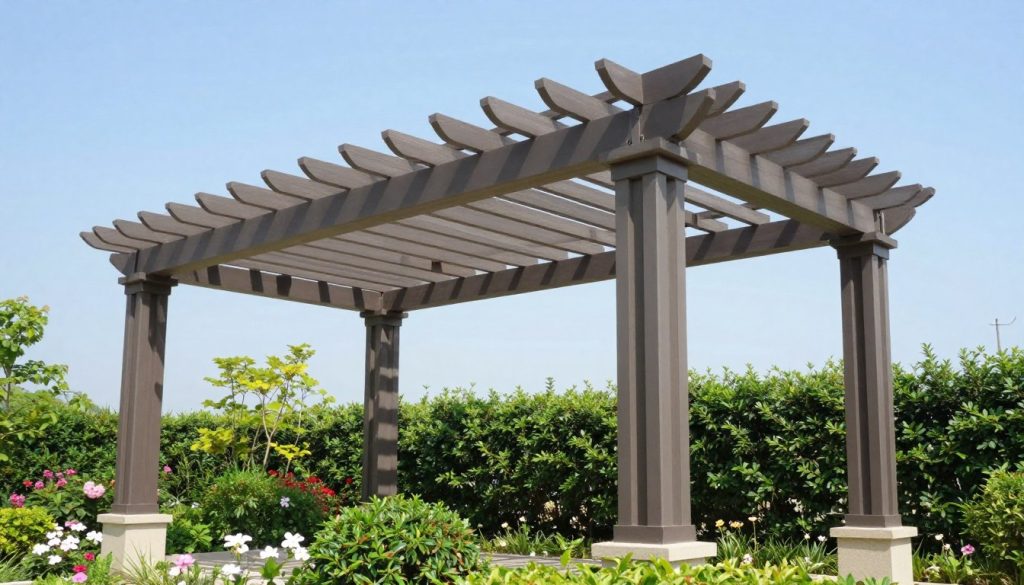
In my experience, molded kits often show trouble after 10 to 15 years in harsh UV and fluctuating weather. That shortened life means more repairs and more maintenance over the same stretch of years.
Aluminum systems, by contrast, are engineered to resist moisture, salt air, and wind without warping or rusting. Their strength helps the structure hold shape for many years.
“Investing in a high-strength frame pays off with stability and fewer surprises over time.”
Design decisions for an outdoor room hinge on how flexible the structure is for color, finish, and features.
I often tell homeowners that the finish matters as much as the frame. Aluminum systems let you pick custom colors and profiles to match your house and landscape.
Some kit options lock you into a single color and simple shapes. That limits the way the pergola reads against brick, siding, or modern glass.
Many people I work with switch from molded kits because they want more design freedom and fewer tradeoffs in appearance and flexibility.
“If you want a structure that feels like an architectural focal point, pick a material that can be tailored to your vision.”
A small decision on material now can turn into years of upkeep or years of freedom.
I always compare expected lifespan before any installation. For example, vinyl pergolas typically last about 20 to 25 years with simple wash-down care.
That said, if color or finish fades there is no practical way to refinish the surface. Fading usually means full replacement, not a touch-up. I’ve seen homeowners regret that choice when they underestimated long-term cost.
By contrast, wood pergolas need staining or sealing every two to three years to prevent rot and insect damage. That adds time and ongoing cost.
Aluminum needs almost no routine care beyond an occasional rinse. Its strength supports a lifespan of 25 to 30+ years and often pays off when you add up maintenance over decades.
“Think long term: low-upkeep choices cut time and hidden replacement costs.”
| Material | Typical Lifespan (years) | Routine Maintenance |
|---|---|---|
| Vinyl | 20–25 | Occasional wash; replace if faded |
| Wood | 15–30 (with care) | Stain/seal every 2–3 years; inspect for insects |
| Aluminum | 25–30+ | Hose rinse; minimal upkeep |
Material choice shapes not just look and upkeep, but landfill impact decades from now.
Sustainability is a growing factor when homeowners pick a pergola material. I see people weighing life-cycle impacts as much as costs and design.
Aluminum wins for recyclability. It is fully recyclable and holds up for decades, which cuts replacement waste.
PVC (often labeled as vinyl) is harder to recycle and can release toxic byproducts when it breaks down. That raises concerns about long-term landfill impact.
“When a frame lasts decades, you lower both costs and environmental harm.”
| Material | Recyclability | Typical Lifespan | Routine Maintenance |
|---|---|---|---|
| Aluminum | High — fully recyclable | 25–30+ years | Occasional rinse; minimal upkeep |
| PVC / vinyl | Low — difficult to recycle | 20–25 years | Wash only; replace if degraded |
| Wood | Moderate — biodegradable if untreated; recyclable if reclaimed | 15–30 years (with care) | Staining/sealing; inspect for rot and insects |
Choosing the right frame for your yard comes down to how you plan to use the space over the next decade.
I believe the best choice matches your long-term goals for your home and outdoor living. If low upkeep and budget matter, a vinyl pergolas kit can fit a small backyard and save time on maintenance.
For homeowners after bold style and customization, wood often wins for design and classic appeal. Aluminum remains the top option for long life and strength if you want a durable structure.
Need help deciding? Call Outback Landscape at 208-607-3776. I’ll walk you through material, style, and the one choice that makes your outdoor space feel like home for years.