Physical Address
304 North Cardinal St.
Dorchester Center, MA 02124
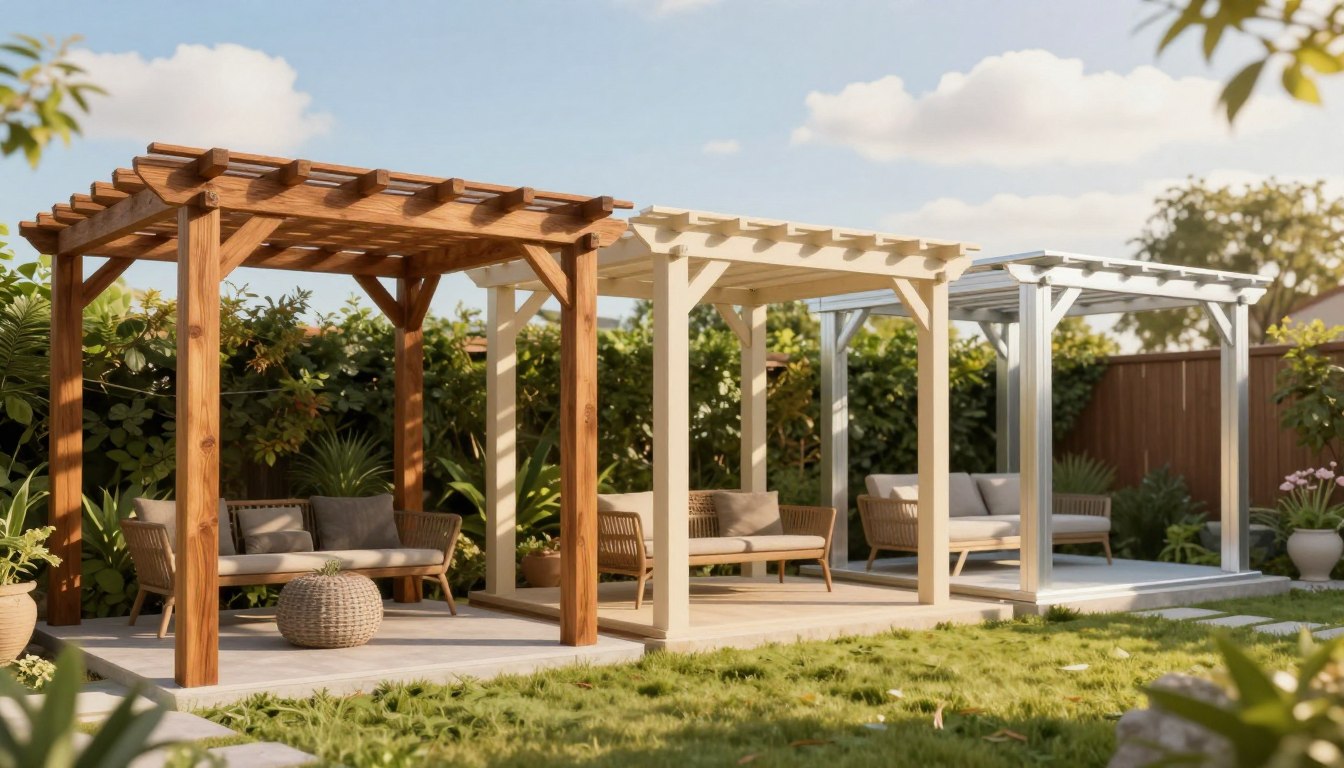
What if the wrong selection for your backyard structure could lock you into years of unexpected upkeep and expense?
Adding a beautiful covering to your outdoor living area is more than a weekend project. It’s a long-term investment in your home and your quality of life.
The choice you make now directly shapes how your space will function, look, and last for years to come. You’re likely considering three primary options: classic wood, modern vinyl, and sleek aluminum.
Each has distinct pros and cons. The key is to balance maintenance needs, upfront cost, long-term durability, and the aesthetic you desire.
This guide will help you compare these popular materials in detail. Our goal is to give you the clarity needed to make a confident, informed decision for your outdoor space.
The foundation of any great outdoor room is the material that defines its character and resilience.
You have three primary options to consider for your project. Each brings distinct qualities to your structure.
Wood pergolas provide a classic, natural look. Choices like cedar and pressure-treated lumber are common. Traditional wood frames age with a unique, rustic charm.
Vinyl pergolas are known for their low-maintenance nature. They offer a uniform color and a clean, formal aesthetic. This vinyl material resists fading and won’t need painting.
Aluminum pergolas are modern and boast excellent durability. This aluminum option requires very little maintenance. Aluminum is also lightweight and allows for extensive customization.
Evaluate the upkeep required and how long each material will last. This directly impacts your long-term satisfaction.
Balance the upfront cost with the value you’ll receive over years of use. The overall style and visual appeal are equally important.
These materials differ greatly in their needs and benefits. Your final selection should align with your budget, local weather, and personal taste. Understanding this leads you to the most suitable option.
When you choose a wood pergola, you’re selecting between two distinct paths: cedar’s natural charm or pressure-treated wood’s practical affordability. This choice affects the look, care, and lifespan of your outdoor structure.
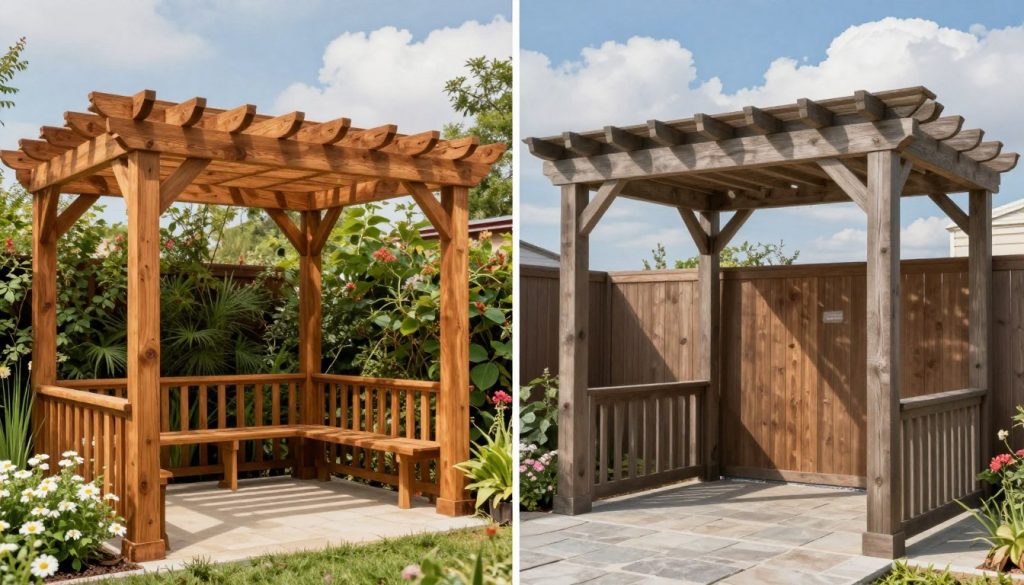
Cedar offers a unique appeal with its warm, reddish color and a pleasant natural aroma. This enhances the atmosphere of your space.
Pressure-treated lumber undergoes a chemical process. This helps it resist rot, mold, and insects. It can be painted or stained in many colors for greater versatility.
Cedar requires periodic staining to maintain its beauty and durability. You cannot paint it. Pressure-treated wood also needs protective coatings.
With consistent regular maintenance, a wood structure can achieve a lifespan similar to synthetic options. Neglect, however, brings a high risk of decay.
Pressure-treated wood often has the lowest upfront cost. But it ranks lower for long-term durability. Cedar is a more popular material despite a higher price.
Without care every few years, rot can shorten your pergola’s life significantly. Your maintenance commitment is key to its staining success.
Imagine an outdoor covering that retains its crisp appearance year after year with almost no effort on your part. This is the core promise of vinyl pergolas. They stand out for exceptional durability and minimal care needs.
A vinyl structure requires very little upkeep. An annual power wash is usually enough to keep its color and look fresh. This makes it extremely low-maintenance over many years.
The hue stays consistent, resisting fade without any painting. Common choices like bright white or beige provide a formal, clean aesthetic. This is different from natural wood’s rustic charm.
These vinyl pergolas are built to last a lifetime with proper care. Their resilience often surpasses wood options. You won’t face regular staining or sealing chores.
If you desire a custom shade, acrylic paint can be applied. However, this adds to your maintenance tasks. You’ll need to clean and touch up the painting over time.
The fixed roof design is either partially open or totally closed. You cannot adjust sunlight exposure or guarantee full rain protection. This is a key point for your outdoor comfort.
In areas with heavy winter snow, vinyl may be less sturdy. The material can struggle under significant snow load compared to wood or aluminum. Assess your local weather conditions carefully.
Despite this, the long-term value is excellent. Low maintenance demands and consistent color are strong advantages. The look might seem less premium than aluminum to some eyes.
Aluminum brings a sleek, contemporary edge to your backyard, merging robust strength with minimalist design. This metal option offers a compelling blend of durability and style. It stands up to the elements with remarkable resilience.
The sturdy metal frame provides the stability of wood but with clean, modern elegance. You can customize your structure extensively with various accessories. This allows the design to match your home’s aesthetic perfectly.
These aluminum pergolas are long-lasting and almost maintenance-free. You won’t need regular maintenance like staining or painting. The metal construction offers superior protection against rain and shine for years.
Aluminum offers a wider color palette than vinyl. It uses a powder-coated finish that lasts virtually forever. Textured coating options help your pergola blend with existing outdoor structures.
Sophisticated models feature louvered roofs with rotating blades. You can open and close them for optimum sunlight control. This gives you adjustable protection from weather.
| Feature | Benefit | Impact |
|---|---|---|
| Sturdy Metal Frame | Combines wood-like stability with modern elegance | Provides superior structural integrity and durability |
| Powder Coating | Wide, fade-resistant color palette | Long-lasting aesthetic without peeling or repainting |
| Louvered Roof Option | Adjustable blades for light and weather control | Enables year-round use with customizable sunlight exposure |
| Low Maintenance | No staining, sealing, or painting required | Saves time and cost over the lifetime of the structure |
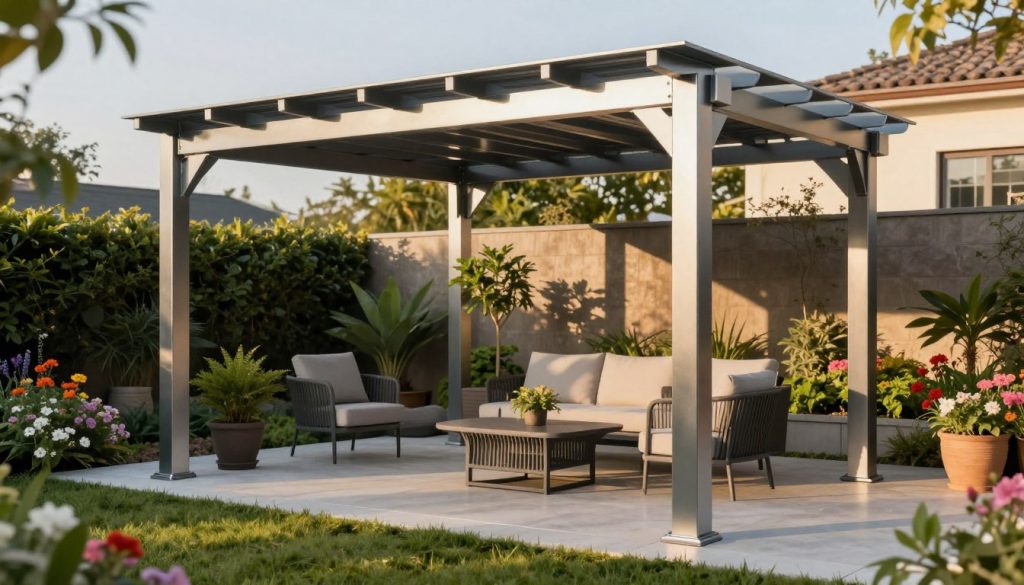
The sleek look of aluminum pergolas has a distinctly modern appeal. It suits homeowners seeking contemporary design elements. With an adjustable louvered roof, these pergolas become a practical choice for year-round enjoyment.
Smart homeowners evaluate both upfront investment and long-term value before committing to an outdoor project. Your choice balances immediate price with ongoing care and visual appeal.
Wood structures typically have the lowest initial cost. Pressure-treated wood is the most budget-friendly option for many.
This lower price comes with trade-offs. It requires more maintenance over years and has a shorter lifespan.
Vinyl and aluminum pergolas usually cost more upfront. The price difference between these two materials depends on quality, size, and style.
Your ongoing time and money commitment varies greatly. Wood needs regular staining and repairs.
Vinyl and aluminum need minimal upkeep. With proper care, wood can last as long as synthetic options.
The risk of premature damage is higher, however. Aluminum offers excellent long-term value due to its durable finish.
| Material | Upfront Cost | Annual Maintenance | Estimated Lifespan |
|---|---|---|---|
| Wood (Pressure-Treated) | Lowest | High (Staining/Repairs) | 10-15 Years |
| Vinyl | Moderate | Very Low (Cleaning) | 20+ Years |
| Aluminum | Higher | Negligible | 25+ Years |
Consider total ownership cost over the structure’s life. A higher initial investment in aluminum often means lower maintenance costs for homeowners.
Choosing the right covering for your patio involves more than comparing specs. It requires visualizing your future life there.
Stand in your backyard and look around. How would a new structure change the feel of your living space? This first-hand assessment is crucial.
Your design vision should lead the way. Do you crave the rustic charm and natural color of wood? Or does a sleek, modern look better suit your home’s style?
Be brutally honest about your available time. A wooden frame needs regular staining. If your schedule is packed, low-upkeep vinyl or aluminum might be smarter.
Local weather conditions matter greatly. Heavy snow or strong sun exposure affects which material offers the best protection and longevity for your space.
| Factor | Question to Ask | Material Implications |
|---|---|---|
| Aesthetic & Style | What vibe do I want for my outdoor living area? | Wood offers rustic warmth. Aluminum provides modern sophistication. |
| Maintenance Reality | How much upkeep am I willing to do each year? | Vinyl and aluminum need only cleaning. Wood requires sealing and staining. |
| Local Climate | How do the elements impact my backyard? | Heavy snow favors sturdy structures. Intense sun needs fade-resistant materials. |
| Long-Term Use | Will this be a permanent hub for living and entertaining? | Choose a durable option you’ll love for decades. This is a lasting addition. |
This structure becomes a permanent part of your home. Feel completely confident in your material decision before you proceed. Your choice should fit both your dream and your daily life.
This investment in your property should bring joy, not chores, for many seasons to come. Your final choice hinges on balancing upfront cost with long-term care.
Wood offers a classic, natural appeal at a lower initial price. It requires regular maintenance like staining every few years to preserve the structure.
Vinyl is a low-maintenance option with a consistent look. Aluminum provides modern style, superior durability, and virtually no upkeep.
Consider your home’s style, available time, and vision for your outdoor living space. Each of these primary materials has distinct strengths. Select the one that aligns with your lifestyle for a project you’ll love for decades.