Physical Address
304 North Cardinal St.
Dorchester Center, MA 02124
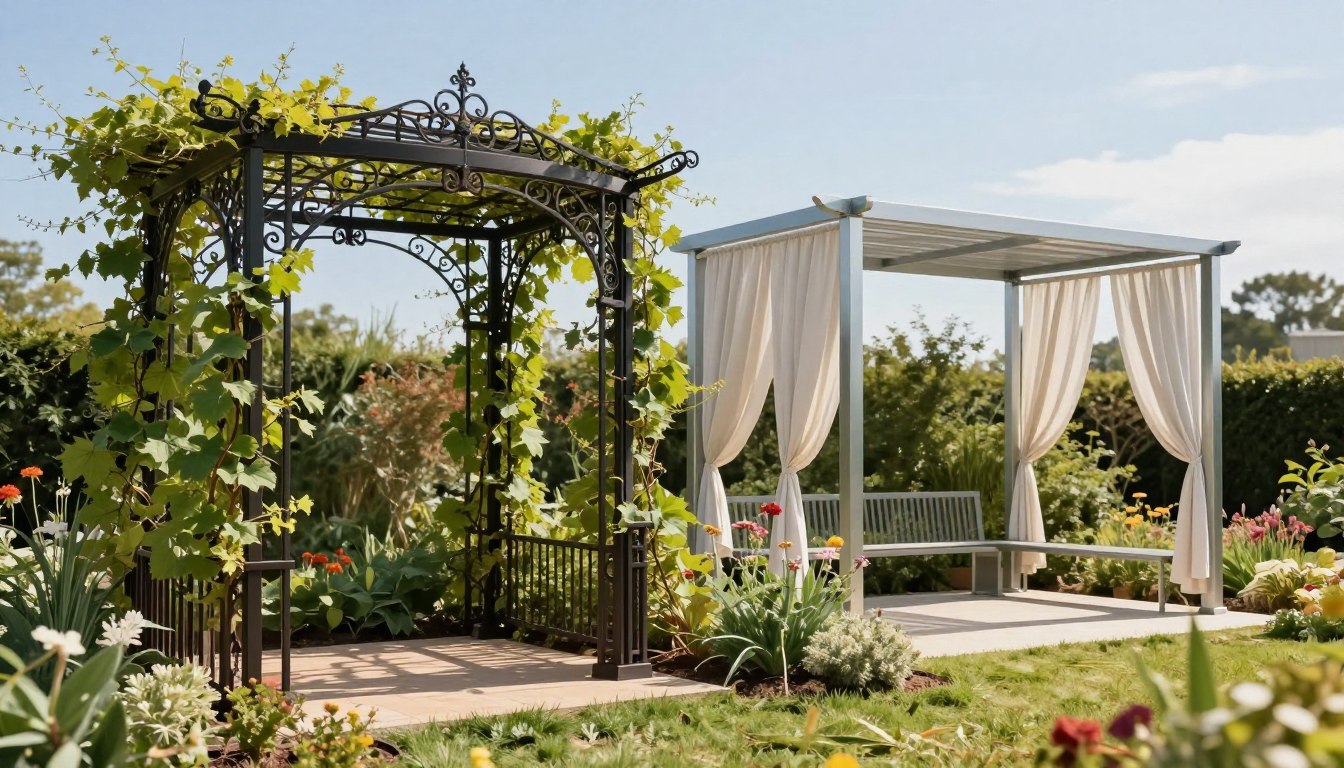
Which material will give your backyard the best blend of style and durability? I ask that because I’ve helped many homeowners weigh looks, lifespan, and upkeep when designing outdoor living spaces.
I’ve spent years guiding clients through choices that shape their yards. My goal is to share clear, practical wisdom so you can choose the right structure for your life and climate.
We’ll compare how each option handles heavy sun, salty air, and freezing winters. I’ll also point out real-world trade-offs about weight, maintenance, and long-term value.
Think of this as a short, friendly workshop: simple facts, honest pros and cons, and examples from projects I’ve led. By the end you’ll know which choice suits your style and your schedule.
Deciding between classic forged metal and a modern lightweight frame is a common crossroads I help clients navigate.
Wrought iron refers to nearly pure iron shaped by skilled craftsmen into detailed scrollwork and sturdy posts. It gives a heavy, anchored presence that reads as timeless and handcrafted.
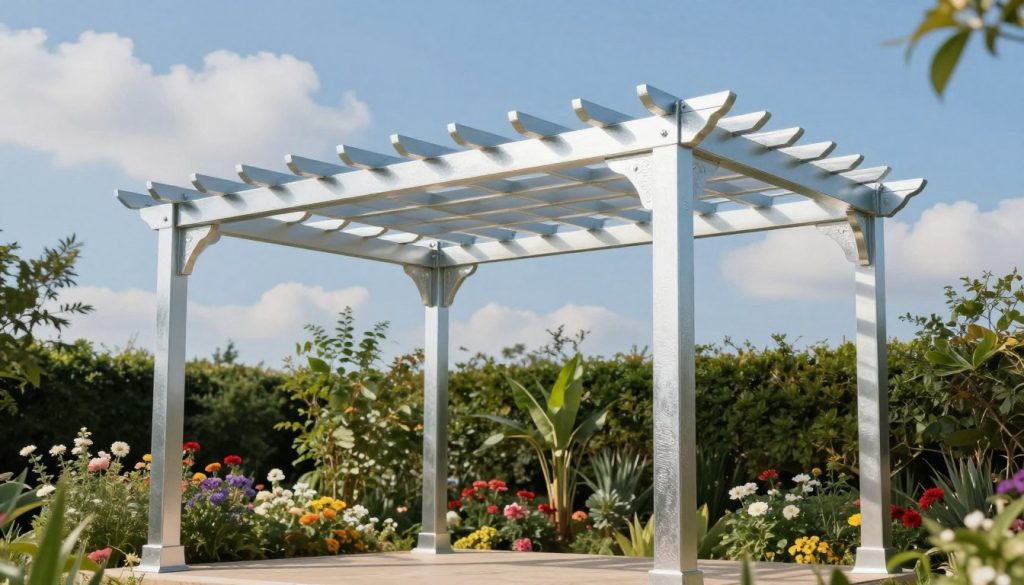
Aluminum changed the game for outdoor structures. It offers strength with low weight, and it resists many common outdoor problems that plague untreated iron.
“Pick the material that matches how you live, not just what looks good on a Saturday tour.”
The makeup of a frame determines both its look and how it stands up to weather.
Nearly pure iron pieces are dense and deliver legendary strength. I often recommend them when homeowners want ornate detail and a heavy, durable feel.
That strength comes with a caveat: without a high-quality finish and regular upkeep, rust can start. Expect periodic repainting or touch-ups to keep corrosion at bay.
Today’s aluminum alloys are engineered to be light but sturdy. Manufacturers use hollow panels and smart extrusion to cut weight without losing stability.
Aluminum resists rust entirely, so it often needs less care than steel or plain iron. A powder coating adds extra protection and long-term appeal for many homes.
| Property | Traditional Metal | Aluminum Alloys | Steel (comparison) |
|---|---|---|---|
| Density / Weight | High — very heavy | Low — hollow panels reduce weight | Medium — heavier than aluminum |
| Corrosion Resistance | Low without finish — prone to rust | High — resists rust naturally | Moderate — needs coating |
| Maintenance | Frequent touch-ups | Minimal with powder coat | Periodic protection needed |
How a material weathers over decades matters more than its first-day shine.
I often tell clients the plain facts: properly cared-for aluminum lasts about 20 to 30 years. It has natural resistance to moisture and needs very little upkeep.
By contrast, classic wrought iron can endure 50 to 100+ years when owners stay on top of maintenance. That longevity comes with a trade-off: it is much more prone to rust if neglected.
Steel frames are another choice, but they usually demand more protective treatments than aluminum to keep weather at bay.
“I’ve seen beautiful iron frames fail when owners underestimated local weather.” — from my project notes
Weight is more than a number; it drives equipment needs, crew size, and anchor design.
I’ve seen projects stall because the team underestimated mass. Heavy frames add cost, extra labor, and more time on site.
Lightweight options cut that friction. They make DIY work realistic and let you adapt the design of your outdoor space faster.
| Material | Typical Weight Impact | Equipment Needed | Installation Time |
|---|---|---|---|
| Wrought iron / iron | High — heavy panels | Crane, forklift, pro crew | Long — careful handling |
| Aluminum | Low — lightweight panels | Small crew, basic tools | Short — faster DIY fit |
| Steel | Medium to high — dense sections | Crane or mechanical assist | Medium — requires solid anchors |
Considerations: proper installation is non-negotiable. Even the best material will fail without correct anchoring and allowance for settling. 🙂
Long-term care for outdoor structures is mostly about simple routines you repeat every season. A steady, small plan protects value and keeps finishes fresh.
Start with a gentle rinse to remove leaves and dirt. I recommend a water jet for stubborn debris; it stops leaves from stagnating and helps prevent rust on exposed iron surfaces.
For aluminum frames, the cleaning process is simple: soap, water, rinse, and dry. That low-effort routine keeps them looking new for many years.
Preventing rust is the core task for dense metal frames. Regular inspections catch chips and scratches early.
If you spot surface corrosion, treat it quickly with a rust converter and touch-up paint. For heavier damage, call a pro before the problem spreads.
Coating matters more than you might think. A high-quality powder coating offers excellent protection against weather, UV, and corrosion for up to 10 years.
Bottom line: routine cleaning plus the right coating is the best process to protect your investment. Good upkeep smooths installation worries and keeps the structure a focal point for years.
Before you sign any contract, compare what you pay now to what you’ll pay across decades.
Initial cost matters. Traditional iron frames often start around 200 euros per square meter. That premium buys heft, detail, and curb appeal that can boost property value.
But sticker price is just the start. Ongoing upkeep raises the true cost. Regular painting, rust treatment, and professional touch-ups add time and expense each year.
Aluminum structures usually cost less over their lifetime. They resist corrosion and need minimal maintenance, which cuts recurring bills and vendor visits.
“For large properties the lifetime difference can reach thousands of dollars—plan for it.”
Bottom line: weigh initial cost against recurring costs, upkeep, and how long you plan to keep the structure. That view protects your investment and prevents budget surprises.
Good design blends form and function—your frame should match the look of your house and the way you live. I like to think of these structures as rooms without walls. They set mood, frame views, and define usable outdoor space.
Modern aluminum offers clean lines and minimalist profiles that suit contemporary homes. It is easy to color-match and often arrives in modular panels that speed installation.
Traditional wrought iron and classic iron pieces bring ornate detail and timeless appeal. They make a bold statement and read as handcrafted strength in a garden.
I also love how engineered panels can mimic heavier looks while cutting weight. That gives you visual strength without the heavy handling.
Bottom line: whether you favor classic detail or sleek minimalism, there are options to match your taste and tie the structure to your home’s architecture. I help clients pick the look that lasts and fits daily use. 😊
When storms roll in, the metal you pick becomes the single biggest factor in how your outdoor room holds up. I focus on how each material behaves under heat, wind, salt, and driving rain.
Aluminum has a melting point of 660°C (1220°F) and delivers steady thermal behavior. That helps panels expand and contract evenly across temperature swings.
Its natural corrosion resistance makes it a top choice for low upkeep. It resists rust, UV damage, and acid rain with minimal maintenance, and can last many years with simple care.
Steel shows great strength, but its real-world durability hinges on a good protective coating. Poor coatings lead to corrosion and frequent upkeep in wet or salty conditions.
“Pick the material that matches your climate—wrong choices drive repeat repairs and hidden costs.”
| Condition | Aluminum | Steel | Practical Note |
|---|---|---|---|
| Corrosion resistance | High — resists rust naturally | Moderate — needs strong coating | Coating quality is crucial for steel |
| Thermal behavior | Even expansion / contraction | Less even; can stress joints | Design tolerances must allow movement |
| Wind and structural load | Lightweight panels perform well | Heavy and strong but needs solid anchors | Weight affects foundation design |
Bottom line: in harsh weather, choosing the right material is the key to fewer repairs and longer life for your structure. 🙂
Local rules can turn a smooth build into a paperwork headache if you don’t check them early. Before the installation begins, verify permit thresholds and setback rules with your city office.
Key needs vary by size and site. Structures over 20 square meters generally require a building permit. Open frames usually avoid development tax unless they become closed spaces over 5 square meters.
If your home sits in a condominium or HOA, expect extra approvals. I always advise clients to confirm covenants and file any required forms before ordering materials. This step prevents surprises.

| Topic | Typical Rule | Action |
|---|---|---|
| Permit threshold | Over 20 m² → permit required | Apply online or at town hall |
| Development tax | Closed structures >5 m² may be taxed | Confirm with assessor |
| HOA / condo | May require approval | Request written consent before work |
Small admin steps save real costs. Understanding the legal needs and the approval process reduces delays and unexpected costs for your property project.
“Handle the paperwork up front and the build will flow—I’ve seen it save weeks and money.”
Choosing the right frame matters for the planet and your wallet. I favor options that cut long-term waste and energy use.
Aluminum stands out because it is infinitely recyclable. Recycling uses far less energy than making new metal. That reduces the carbon footprint of a structure over its life.
The fact that aluminum does not rust also helps. It avoids early replacement and keeps materials out of landfills.
Steel can be managed responsibly, but frequent maintenance and protective coatings raise its overall impact. More touch-ups mean more materials and trips from vendors.
Long-lasting choices add clear value to your property. A durable frame reduces the need for repairs and new parts down the road.
“Pick materials that last—it’s one of the easiest ways to be cost-effective and eco-conscious.”
Final verdict: a great outdoor structure earns its keep by matching form, function, and the hours you’ll spend caring for it.
Your choice should reflect your budget, design taste, and how much maintenance you want. Materials and metal options differ in strength, weight, and durability, so pick what meets your needs.
For most modern homes, aluminum offers low-cost installation, light weight, easy cleaning, and minimal upkeep. Traditional iron suits those who prize classic designs and accept more care time.
Think long term: weigh initial cost against years of maintenance, value, and longevity. Make the decision that fits your home and turns the structure into a true investment for your property.