Physical Address
304 North Cardinal St.
Dorchester Center, MA 02124
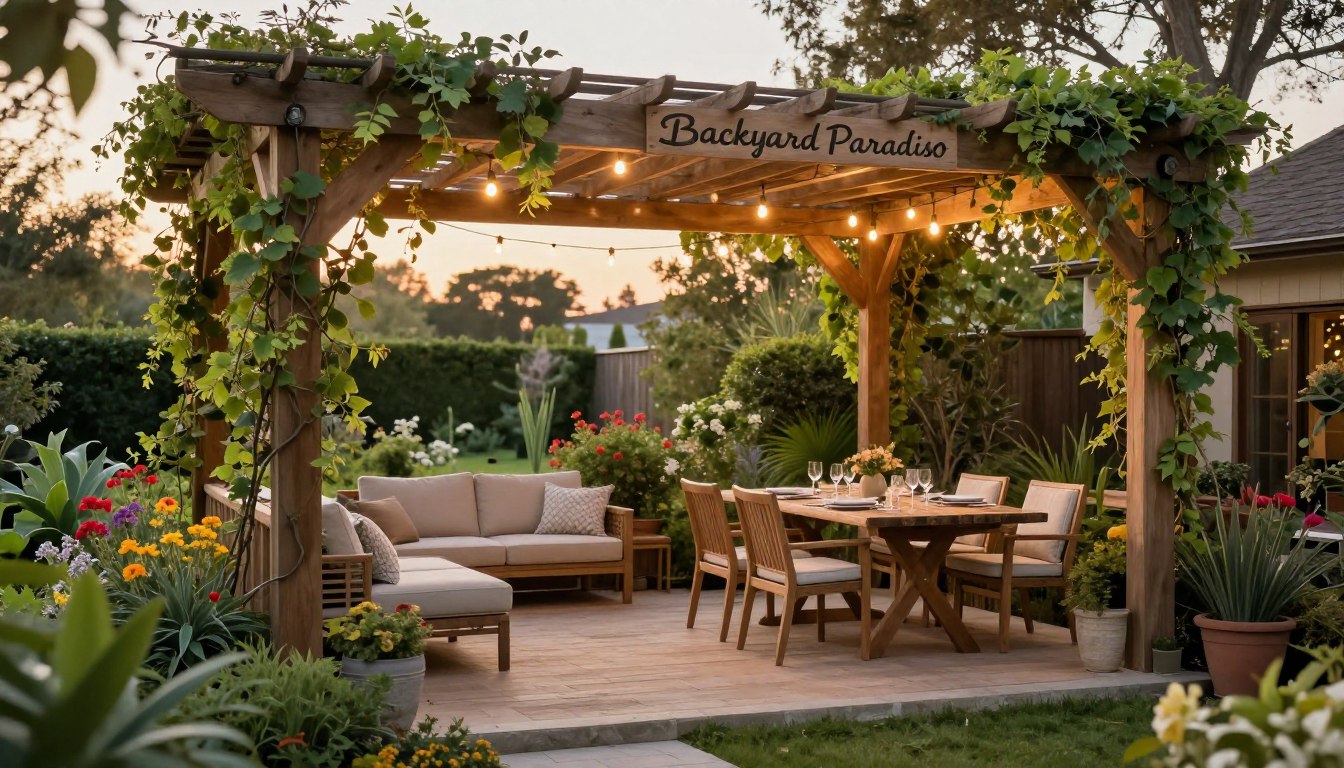
What if your backyard could become an extension of your living room, a place where style meets serenity? Many homeowners see their outdoor area as just a patch of grass, but it holds incredible potential. With the right approach, you can create an inviting oasis that boosts your home’s value and your quality of life.
This comprehensive guide walks you through gorgeous ideas that cater to every style and budget. From small touches that add charm to bold upgrades, you’ll discover how to transform an ordinary yard.
Using elements like twinkling lights, cozy seating, and lush greenery, you can enhance both beauty and function. We’ll provide strategies to turn a simple structure into a stunning focal point.
You’ll learn to balance looks with practicality. This ensures your space serves as a visual centerpiece and a comfortable living area. Whether you prefer minimalist modern or lush bohemian, this resource gives you the knowledge to personalize your retreat.
The rise of alfresco living has made these open-air frameworks a top choice for expanding a home’s usable square footage. Homeowners now seek a complete outdoor living space that offers the comfort of indoors with the freshness of nature.
With their open sides and slatted ceilings, these structures create distinct and adaptable spaces. They provide cooling breezes, dappled shade, and a strong connection to your yard.
This feature serves as a vital bridge between your home and garden. Your approach to decorating must respect both environments. It’s different from working on an enclosed patio or gazebo.
Understanding this purpose helps you make smarter choices. Proper decoration transforms a basic frame into an inviting outdoor living area. It becomes perfect for relaxation, dining, or entertaining guests.
The core principle balances visual appeal with practical needs. Think about weather resistance and easy maintenance. Your structure’s location, size, and build should guide your initial ideas.
The bones of your outdoor living area, from posts to beams, define its character and your decorating path. Your framework’s material and shape are the foundation. They influence every choice you make afterward, from color schemes to the accessories you select.
Wood offers natural warmth and a traditional appeal. It accepts any paint or stain, making it highly versatile. This material does need a fresh protective coat every year or two.
Metal options, like aluminum, provide clean lines and modern aesthetics. They are light, strong, and require almost no maintenance. Their rust-resistant, powder-coated finish won’t chip.
Fiberglass combines design flexibility with low upkeep. Vinyl is a lower-cost choice but isn’t as durable as other materials. Your selection dictates the structure’s feel and your long-term care routine.
Your chosen framework should create visual continuity. It needs to harmonize with your home’s architecture and existing backyard features.
The posts and beams become natural anchoring points for your decor. Knowing your material’s load-bearing capacity ensures safe adornment. This harmony turns a simple structure into a cohesive part of your landscape.
Before you hang a single light or place a chair, take a moment to truly see your structure’s potential. The most effective approach begins with a few fundamental principles. These core ideas ensure your space is both beautiful and genuinely functional for daily use.
Basic design elements like proportion and balance are crucial. They apply to your outdoor area just as they do inside your home. This creates a cohesive look that feels intentional.
Let your framework’s existing features guide your choices. Built-in planters or pre-installed hooks offer a natural starting point. This strategy builds on your structure’s inherent strengths.
Successful adornment improves comfort and usability. It should enhance shade and keep airflow open. Avoid the common mistake of prioritizing looks over function.
The best pergola decorating tips emphasize adaptability. Your decorated space should transition easily between seasons. This creates a versatile area ready for different uses all year.
As dusk settles, your outdoor area can transform into a haven of soft light and comfort. The atmosphere you craft determines how often you’ll enjoy your space after dark.
String lights are a top choice for adding both style and function. Draping them overhead or wrapping the perimeter gives your area a magical feel.
The open beams of your structure offer perfect attachment points. You don’t need complex wiring. This makes installation straightforward for any homeowner.
Choose from vintage Edison bulbs or modern globes. Each style casts a distinctly different mood. The warm glow turns your spot into an intimate retreat.
Proper lighting placement extends your living hours outdoors. It makes the area inviting for relaxation or guests. Layering light sources at different heights adds visual depth.
This approach is cost-effective and impactful. Your evenings become more enjoyable under the gentle illumination of well-planned string lights.
Strategic additions can transform your breezy structure into a private sanctuary without sacrificing its airy feel. Controlling sunlight and creating visual barriers are essential for comfort and seclusion.
Flowing outdoor curtains serve multiple purposes. They block harsh sun and create soft barriers for privacy. The fabric you choose defines the look and function.
Sheer materials offer gentle light filtering and maintain airflow. Heavier drapes provide maximum shade and wind protection. Installing panels on just one or two sides maintains ventilation while adding seclusion.
| Fabric Type | Shade Level | Privacy Level | Best For |
|---|---|---|---|
| Sheer (Polyester, Linen) | Light to Medium | Partial | Airy, boho vibe; gentle light diffusion |
| Heavy Duty (Canvas, Sunbrella) | High | Full | Maximum sun blocking and wind protection |
| Water-Resistant Synthetic | Medium to High | Medium to Full | All-weather use; easy maintenance |
Adjustable canopy systems give you complete control. Retractable solutions offer full protection when desired and open views when weather permits.
The best outdoor rooms adapt to the day’s rhythm, offering shelter or openness with simple adjustments.
Automated louvered panels or sliding canopy frames are functional investments. They become a dominant visual feature, introducing color without permanent change. Your choices in textiles and systems directly shape your area’s comfort and style.
Bringing the garden directly into your covered space creates a seamless blend of architecture and landscape. This approach adds life, texture, and a sense of tranquility.
Climbing vines are a classic choice for adding organic beauty. They naturally ascend your structure’s posts and beams, creating living shade.
Choose fragrant options like jasmine or roses. These plants enhance your backyard with delightful scents. They also offer extra protection from the sun.
Built-in planters are a smart design solution. They integrate greenery without needing many separate pots. This keeps your area clean and uncluttered.
You can combine different types of vines and container plants. Use hanging planters for trailing varieties. Place taller potted plants around the perimeter for depth.
Select species suited to your local climate. This ensures your green oasis thrives with minimal care. Your pergola becomes a living, evolving part of your home.
Selecting the right pieces is the most important step in creating a functional outdoor room. Your furniture defines the primary use of your outdoor space, whether for dining, lounging, or as a multi-functional living space. First, consider the scale of your structure.
Oversized items will make a small area feel cramped. Undersized pieces get lost in a large, open framework. Match your furnishings to the intended purpose from the start.
Comfortable seating transforms a beautiful structure into a place you’ll actually use. Ergonomic Adirondack chairs offer superb relaxation. Sectional sofas create inviting spots for conversation and entertaining.
Choose weather-resistant materials built for outdoor life. Teak, rattan, powder-coated metal, and all-weather wicker combine durability with style. They withstand sun and rain while complementing your structure’s design.
| Material | Durability | Maintenance | Best For Style |
|---|---|---|---|
| Teak | Very High | Low; ages to silver patina | Classic, natural |
| Rattan / Synthetic Wicker | High | Easy wipe-down | Boho, coastal |
| Powder-Coated Metal | Very High | Very low; rust-resistant | Modern, industrial |
| All-Weather Wicker | High | Hose off debris | Transitional, casual |
Position your furniture to capture the best views and maximize overhead coverage. Ensure pathways around posts remain clear. This thoughtful placement prevents a cluttered feel.
Your furniture sets the foundation. All other decor accents build upon this critical choice.
The style and material of your seating and tables anchor the entire area. Making this choice early ensures your pergola is both beautiful and genuinely usable.
Decorative lighting does more than brighten; it defines the mood and extends the hours you enjoy your outdoor living area. The right fixtures transform your structure into a welcoming evening destination.
Integrated solar lights offer a clean, modern solution. They are built directly into your framework’s beams or posts. This approach provides reliable, low-maintenance lighting.
Solar-powered options eliminate complex wiring. They don’t increase your home energy costs. You get a polished look that feels intentional.
Position fixtures to follow your structure’s lines. Even spacing along beams creates visual harmony. Choose soft white tones for a warm, inviting light.
Avoid harsh, cool brightness. It can make spaces feel sterile. Also, keep cords clear of moving parts like canopy joints.
| Lighting Type | Installation | Best For | Ambiance |
|---|---|---|---|
| Integrated Solar | Permanent, built-in | Low-maintenance, modern style | Polished, seamless |
| Deck Lights (on Posts) | Mount to structure | Highlighting architecture or seating | Versatile, directional |
| String Lights | Temporary, draped | Cost-effective, festive mood | Casual, magical |
Deck lights mounted on posts can shine up or down. Combining multiple types creates layered illumination. This adapts to different activities in your home oasis.
Textiles and fabrics offer a powerful way to infuse personality and softness into the geometric lines of your backyard framework. This approach creates a relaxed, bohemian style that feels both artistic and inviting.
Lightweight, sheer fabric hung from overhead beams introduces movement and visual interest. It maintains the open, airy feeling essential to your outdoor living area. Your choice of material dramatically shapes the overall aesthetic.
Natural linens suggest casual elegance. Bold patterns create vibrant, eclectic space. Macramé hangings suspended from the roof add handcrafted texture.
These artistic elements perfectly complement a laid-back atmosphere. Always select outdoor-appropriate materials that resist fading and mildew. This ensures your textile decorations last through the seasons.
Layering different fabric types creates depth and visual richness. Combine sheer curtains for gentle filtering with decorative macramé accents. The flowing nature of fabrics provides beautiful contrast against your pergola’s structure.
This method is an easy, inexpensive way to transform your outdoor living zone. You can refresh the look whenever you desire a change. The result is a balanced composition that feels designed yet naturally relaxed.
A well-placed outdoor rug can instantly carve out a dedicated spot for meals or conversation within your covered patio. This simple addition organizes your open layout into clear, functional zones.
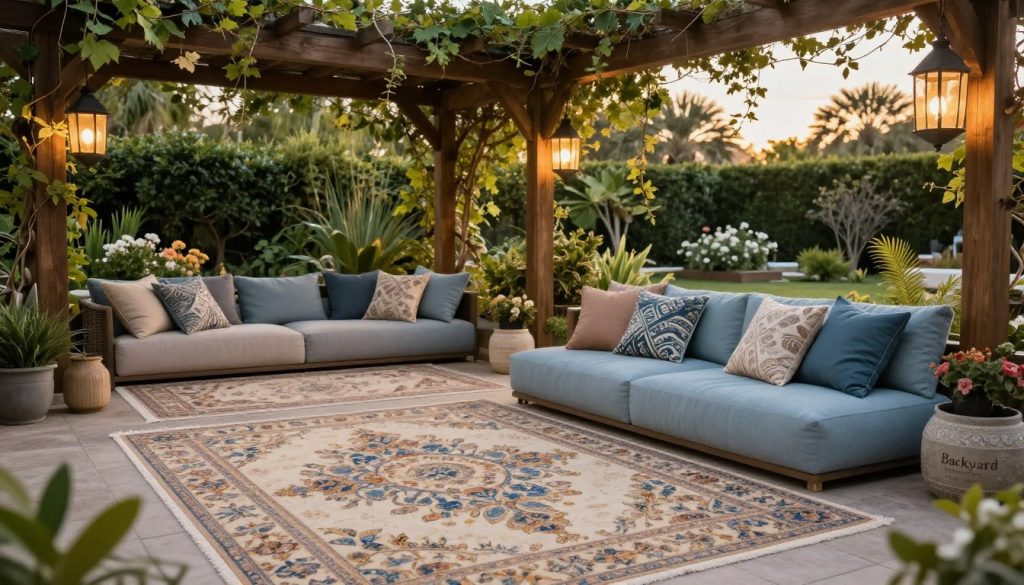
Use rugs to visually separate your dining area from your lounge seating. Place a table and chairs on one rug. Set sofas and a coffee table on another.
This creates boundaries without walls. Your patio feels organized yet open. Rugs add softness and color to hard surfaces.
They make the area feel more intimate and room-like. Always choose rugs made for outdoors. They must resist sun, rain, and mildew.
Size is crucial. Your rug should extend beyond the furniture edges. This properly anchors the dining or lounge zone.
Longer rectangular structures are perfect for multiple zones. You can have a dining spot, a conversation area, and a quiet nook. Each serves a different purpose under one roof.
Define your dining area with a table that fits your group. This turns your patio into a true outdoor room. It’s perfect for family meals and parties.
DIY projects offer a fantastic way to inject unique character into your backyard retreat. You can personalize your structure with handmade elements that reflect your style. This approach often saves money compared to buying high-end accessories.
Start with simple pergola ideas that require minimal skill. Paint geometric patterns on the posts or create custom cushion covers. A homemade fabric canopy adds shade and a personal touch to your design.
These projects let you craft specialized spaces for your hobbies. Build a simple bookshelf for a reading nook under your pergola. Assemble floor cushions and candles for a serene meditation corner.
The best pergola ideas blend purchased items with your creations. This balance gives a professional look while feeling authentically yours. Your backyard space becomes a true extension of your personality.
Begin with a realistic project that matches your skill level. You’ll find immense satisfaction in using your own hands to create a welcoming oasis.
The true test of a well-designed outdoor room isn’t how much you add, but how much you choose to leave out. Successful design prioritizes function and usability alongside visual appeal. This requires deliberate restraint to preserve the open, airy quality that makes these structures so attractive.
Consider a common mistake. A homeowner layered their pergola with full curtains, lanterns, and oversized planters. The space looked styled but airflow was blocked. Cleaning became difficult, and they rarely used it.
The solution was strategic editing. They simplified to a core canopy, lighting, and comfortable seating. This immediately transformed it into a daily-use area again. The lesson is powerful.
You must regularly assess each decorative element. Does it serve a clear purpose? Remove anything that complicates cleaning or makes the area feel cramped. This approach maintains the structure’s inherent openness.
The most elegant designs achieve a minimalist balance. Every item earns its place through function or significant beauty. Remember, the pergola framework itself provides visual interest. You don’t need to fill every corner.
The key to lasting enjoyment lies in decorating with the calendar in mind. Your outdoor area must adapt to changing weather to stay beautiful and functional. Planning for four distinct seasons transforms a fair-weather spot into a year-round asset.
Spring and summer focus on managing the intense sun. Use adjustable canopy systems or light fabrics to create comfortable shade. This maintains airflow while protecting you from heat.
Fall shifts the focus toward warmth and coziness. Incorporate warm lighting to extend usable hours as days shorten. Minimize fabric elements that can trap moisture and falling leaves.
Winter preparation in colder climates is crucial. Remove delicate fabrics to protect them. Shield the pergola posts and roof structure from snow and ice. Keep décor to weather-resistant essentials.
| Season | Primary Focus | Key Elements | Action Items |
|---|---|---|---|
| Spring/Summer | Sun & Heat Management | Adjustable canopy, light fabrics, greenery | Deploy shade solutions, ensure ventilation |
| Fall | Warmth & Light | Warm lighting, minimal textiles | Add lighting, reduce fabric, clear debris |
| Winter | Protection & Simplicity | Bare structure, weather-resistant items | Store cushions, inspect posts, clear roof |
Invest in retractable or removable elements. Canopy covers that roll back make seasonal transitions simple. Automated louvered roof systems offer ultimate control over sun and rain.
Regular inspection of your pergola’s posts ensures it withstands seasonal stresses. This approach keeps your space safe, beautiful, and ready for use whenever you are.
A cohesive color scheme is the secret weapon for transforming a basic structure into a designer space. A controlled palette creates a modern and calm atmosphere. Follow a reliable formula for success.
Start with one neutral base color for major elements. This includes your pergola framework, flooring, and large furniture. It provides a calm foundation.
Introduce one soft accent through cushions or a fabric canopy. Add natural elements like plants and wood textures. This combination builds visual harmony.
Mix materials like smooth metal against rough wood. Combine these with soft fabrics and hard stone. This adds dimensional interest to your pergola design.
Your chosen palette should connect to your home’s exterior. This creates visual flow between indoor and outdoor spaces. A high-end look depends on thoughtful coordination.
Achieving a designer style relies less on expensive items and more on the quality and harmony of your choices.
Natural wood tones and greenery prevent a scheme from feeling flat. Balance bold, colorful statements with restrained neutrals. This lets your focal points truly shine.
| Material Pairing | Texture Contrast | Resulting Style |
|---|---|---|
| Wood + Metal | Rough + Smooth | Modern Organic |
| Stone + Fabric | Hard + Soft | Rustic Elegant |
| Wicker + Concrete | Woven + Solid | Casual Contemporary |
The ultimate outdoor living space isn’t defined by one feature. It’s created by the smart combination of several that work together in harmony.
Your structure can organize multiple activity zones. This turns your yard into a true extension of your living area.
Position pergolas near a pool for essential shade. This creates a defined lounging spot separate from the swimming zone.
Incorporate an outdoor kitchen or bar underneath. You can cook, serve, and socialize without running back to your home. It becomes the ultimate entertainment hub.
Add a fire pit to extend your use into cooler evenings. It provides warmth and becomes a natural conversation center.
Plan these combinations carefully. Ensure adequate space and logical flow between activities. Built-in features like planters or counters integrate cleaner than added-on items.
Pergolas also work beautifully on covered porches or elevated decks. They use similar materials to create a seamless transition from your home.
| Application | Primary Use | Key Features | Design Tip |
|---|---|---|---|
| Poolside | Shade & Relaxation | Lounge seating, weather-resistant fabrics | Ensure clear path from water to seating |
| Kitchen/Bar Area | Entertaining & Dining | Built-in counter, bar stools, storage | Position grill/sink for minimal smoke drift |
| Fire Pit Zone | Evening Gatherings | Fire pit, cozy seating, ambient lighting | Check local fire codes and maintain clearance |
| Elevated Deck | View & Privacy | Rail planters, retractable canopy | Use lightweight materials for structural safety |
You now hold the blueprint to turn any pergola into a functional and beautiful extension of your home. The most effective approach enhances your structure’s inherent strengths.
It uses features like canopies and lighting to create an outdoor living space you’ll actually use. The principles covered work for any pergola style or budget.
Begin with core elements like seating and shade. Then, layer in personal touches. Your transformed area becomes a true living space under the open sky.
With these ideas, your backyard framework evolves into a cherished retreat. It enhances daily life and adds lasting value.